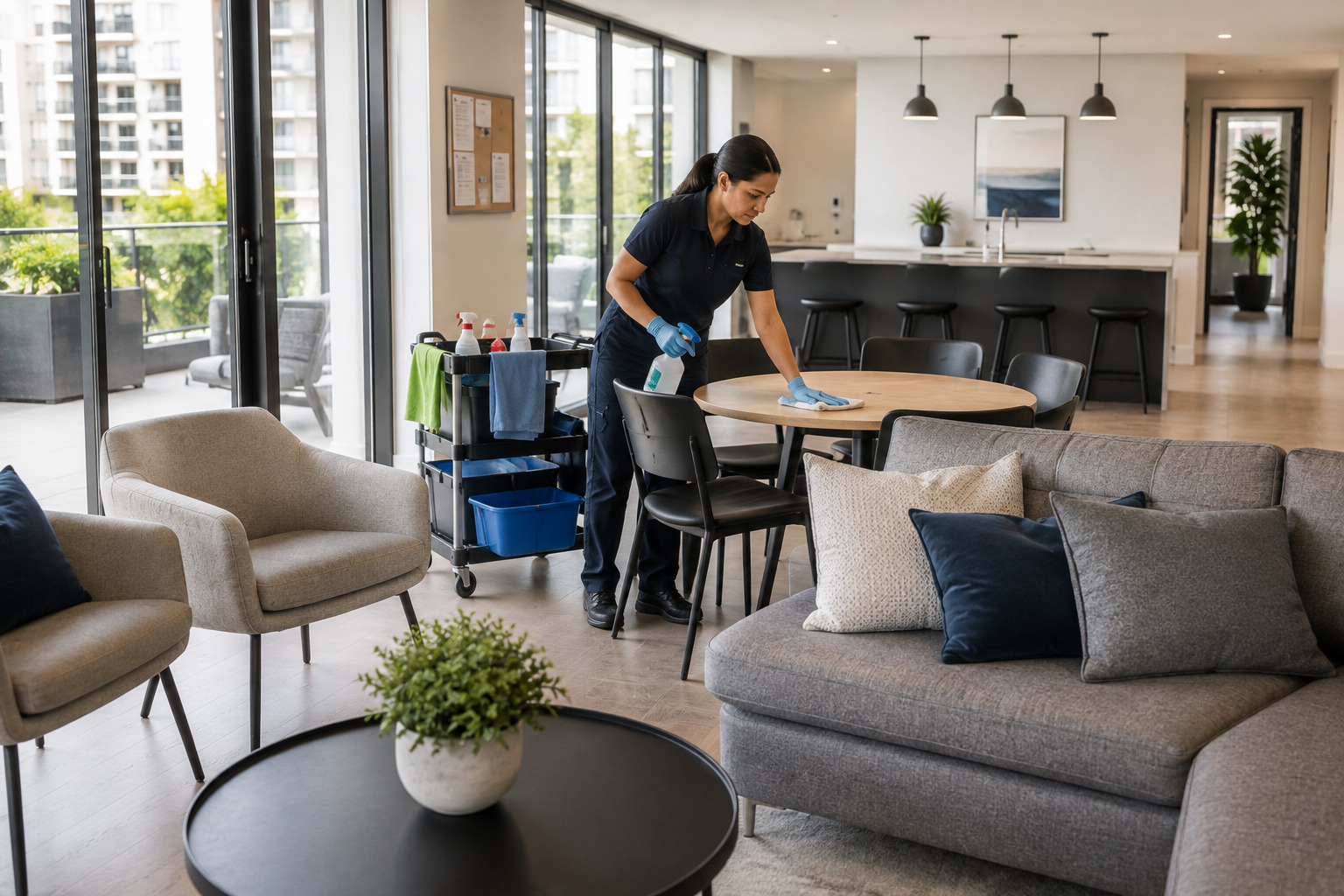
Common area cleaning is the most visible service an owners corporation pays for. Residents may never read the financial statements, but they notice a dirty lift, an overflowing bin room and cobwebs in the stairwell every single day.
This checklist covers what a proper body corporate cleaning scope includes in a Melbourne apartment building, organised by frequency, so committees and building managers can build or audit a scope of works.

Why a Written Checklist Matters
Under the Owners Corporations Act 2006 (Vic), an owners corporation must repair and maintain the common property. Larger owners corporations also have obligations around maintenance planning under the tier system introduced in 2021. A vague cleaning contract makes those obligations harder to demonstrate and harder to budget for. For committees reviewing service providers, understanding what to look for when choosing a body corporate cleaning company can help ensure cleaning requirements are properly addressed.
- A documented checklist gives the committee three things:
- A basis for comparing quotes on equal terms
- A record that common property is being maintained
- A way to raise a service issue without it becoming a personal dispute
Daily or every visit
These are the tasks residents judge the building by.
- Empty and reline common area bins
- Spot clean lift interiors, including floor, mirrors and control panels
- Wipe entry door glass, intercom panel and letterbox surrounds
- Sweep or vacuum the main entry and lobby
- Spot mop hard floors where spills or tracked dirt are visible
- Remove litter from the front entry, driveway and immediate surrounds
- Check and clear the bin room floor
- Remove any dumped items blocking corridors or fire egress paths
Weekly
- Vacuum all common corridors and carpeted lift lobbies
- Mop hard floor corridors, stairwells and lobbies
- Wipe handrails, balustrades and light switches
- Clean stairwell treads and landings
- Wipe skirtings in high-traffic areas
- Remove cobwebs from entries, corridor ceilings and stairwells
- Clean and disinfect bin room floor and bin lids
- Wipe mailbox banks and noticeboards
- Check and clean common laundry or amenity rooms if present
Fortnightly or Monthly
- High dusting of corridor light fittings, vents and ceiling corners
- Detailed clean of lift door tracks
- Clean internal glass in lobbies and common rooms
- Wipe fire hose reel cabinets and extinguisher cabinets without obstructing them
- Sweep carpark and basement areas
- Clean common gym, pool surrounds or rooftop furniture if the building has them
- Wipe down garden furniture and clean BBQ areas
- Clean bin store walls and remove residue
- Sweep and tidy plant rooms and service corridors where access is permitted
Quarterly
- Pressure wash the main entry, footpath and bin store floor
- Clean external ground floor glass and entry doors
- Carpet spot treatment in corridors and lobbies
- Detail clean of stairwell handrails and undersides
- Clean carpark line markings and remove oil marks where practical
- Clean accessible external light fittings
- Deep clean lift interiors including brushed metal surfaces
Annually or as Scheduled
- Full carpet steam cleaning of common corridors and lobbies
- Hard floor strip and reseal in lobbies and high-traffic areas
- External window cleaning to common property glass, using licensed height access where required
- Full pressure wash of driveways, carparks and podium areas
- Gutter and grate clearing where it falls within the cleaning scope
- Deep clean of bin chutes if the building has them
Tasks committees commonly forget
- Bin chute rooms on every level. These generate the most complaints and are often missing from the scope entirely.
- Fire stairs. Rarely used, rarely cleaned, and inspected by fire safety auditors.
- Carpark stairwells. Usually the dirtiest area in the building.
- Behind the letterbox bank. Junk mail accumulates and attracts pests.
- Roller door tracks and drainage grates. Blocked grates cause flooding in basement carparks.
- Graffiti removal. Decide whether it is in scope or charged separately, and agree a response time.
Bulky furniture and illegally dumped items may also require separate collection. Where these are not covered by the regular cleaning contract, consider arranging rubbish removal services in Melbourne to keep shared areas clear.
Safety and compliance to confirm with your provider
- Public liability insurance with a sum insured appropriate to the building
- Workers compensation for all staff attending site
- Safety Data Sheets for every chemical used on common property
- Wet floor signage during and after mopping
- Height safety arrangements for any work above ground level
- Confirmation that cleaning does not obstruct fire egress or fire equipment
How to write your scope of works
- Walk the building with the provider. A quote given without an inspection is a guess.
- List every common area by name. Do not write “common areas”. Write “Level 1 to 8 corridors, fire stairs A and B, basement carpark levels 1 and 2, bin room, mailroom, rooftop terrace”.
- Attach a frequency to each task. Use the four groupings above.
- State attendance hours. The number of cleaner hours per week is the figure that determines whether the scope is achievable.
- Separate periodic work. Carpet cleaning and pressure washing are budgeted annually, not absorbed into the monthly fee.
- Set a review point. Six months is sensible for a new provider.
Easy & Shine Cleaning Services provides body corporate and strata cleaning across Melbourne, with onsite assessments, customised cleaning plans, insured cleaners and high pressure cleaning available for carparks and external areas. Call 0438 183 061 to arrange a site walkthrough.